Orchid Enterprise Inc. Newsletter
| Volume 08 |
| Issue 01 |
August 2008
It seems like we just got things put away from last year's NCOS Show and here it is, time to start preparing for the show again. We're going to try and order SMALL plants this year since our greenhouse is overflowing again. Once again we're faced with the big question: "Can we get it all back into the greenhouse before the first frost?". The second question is: "Will it all fit?!". We've started some new African Violets and added Streptocarpus to our product line. We must be crazy!
operation after some remodeling and medical issues that kept us 'out of the kitchen' all year. We're anxious to get back up and running and we'd like to extend our heart felt 'Thank You' to all our customers who have been patiently waiting word on their babies. We expect to be up and running before year's end. Sincerely, Ken Meier ken-meier@orchidenterprise. com |
Spring is here in the Washington DC area. The trees are starting to leaf out, the cherry trees are in bloom, the daffodils are blooming and all the spring bulbs are starting to pop out of the ground. Here at Orchid Enterprise Inc., we’re winding down from all the spring shows and we’re getting ready to start moving plants outside for the summer. That means fixing the shade house that blew down during the last wind storm, cleaning off the benches in the shade area and making sure everything is set up and ready to go. When the night temperatures stop dropping below freezing, we’ll move our Cymbidiums and Noble Dendrobiums to the shade area. As night temperatures increase, we’ll move our high-light plants like Cattleyas, Catasetums, and Dendrobiums (Den-Phals) out as well. Our lower light orchids, we keep in the greenhouse where it’s cooler and more humid. All our plants are looking forward to being spread out again where they can breathe and have room to grow. It’s not too late to re-pot if you haven’t done so already. (See our article on repotting below) We’ve been working hard over the winter months getting caught up on our repotting. Did I say caught up?? Well, in the greenhouse, we’re almost caught up. Our plants in the Light House (That’s “light” as in High Intensity Discharge lights – not the foghorn, ship signaling light house) are in desperate need of repotting. We’ll get started on that project SOON. First we’ll repot the plants left over from many of orchid shows and sales we were at this spring. |

2) What's Happening Now At OEI 3) It's Not to Late to Spike your Phals 4) Why Re-pot 5) Re-potting Tips 6) Be a Good Boss and Manage your Pests 7) Join a Society 8) Post Show Sale - 20% off!!! 9) African Violet Update |
| This issue's Highlights: |
| What's happing now at OEI |
end-of-summer and fall maintainance for our plants. This means getting things repotted so they can be established before the short days of winter are upon us. It also means checking our plants for pests and treating them before we have to bring them in for the winter. It's not too early as long as there's warm weather upon us. Last month we discussed the used of Ultra-Fine Oil when repotting our orchids. It's still the best thing to use before bringing your plants indoors. Just remember to keep your plants out of the sun after they've been sprayed and make sure you cover all parts of your plants - top to bottom. Being outside, you don't need to worry about good air movement, but it wouldn't hurt to put a fan on them so they dry off quickly. For our indoor growers, Now's the time to use the Ultra-Fine oil - while you can still take your plants outside and not worry about getting the oil on your furniture and floors. For our Gesneriad growers (That's African Violets and their kin to you orchid nuts), we suggest using Bayer's insecticide that has Iminicloprid as an ingredient. We mix 3 table spoons in a gallon of water and mist everything. We'll do this 2-3 times in a week. Your plants will take up the chemical and transport it throughout the plant and kill off any sucking bugs like meallys, scale and the like. Since using the imidicloprid, we haven't had problems with thrips either. A good shot of Kelthane will take care of the mites. Please, please, read the directions and take precautions so you don't poison yourself. |
| It's time to spray |
| Repotting Tips |
material when repotting, including rotten roots, old flower spikes & sheaths. Don’t forget to remove the sarongs (you know – the thin dry paper material around the Cattleya pseudobulb). Sarongs are easier to remove when wet. Be careful not to damage the ‘eyes’ or new emerging new growths when removing the sarongs. Pull up, not out to remove the sarong from around the eye or new growth. Dried flower sheaths may have developing flowers in them if they haven’t bloomed before. Leave these sheaths on the plant if they haven’t rotted – they may produce blooms even if they are one or two years old. Lc. Fire Dance ‘Patricia’ and Lc. Gold Digger are both notorious for blooming on the previous years growth. Spray your plants (roots and all) with Sunspray Ultra- Fine Oil when repotting. This is a GREAT pest management opportunity. Many orchids have fine wire roots that are covered with a spongy material called velamen. Often times, the velamen on the roots will rot, but the wire inside is still viable. If you have a poor root structure, remove the rotted velaman, and leave the fine wire root It may still be functional and will help anchor the plant until it can produce more roots. After re-potting and new growth begins, do not disturb your orchid. Allow the roots to find their own way into the mix. Disturbing the tips of the roots can damage them and cause them to stop growing. Remember - with some orchids, the lack of water actually stimulates new growth. That's why we don't water for right away, after re- potting. |
| A Note From Our President: |
Many people ask us what we use to keep our pests under control. A commercial grower can use a lot of chemicals and methods that simply aren’t available or practical to home or hobby growers. For the home grower, we suggest a product called Sunspray Ultra-Fine Oil. It kills by covering the pests with a fine layer of oil and it smothers the little buggers. It’s non- toxic and safe around children and pets. Spray twice, 7-10 days apart. Use it according to directions - so read them!. We do this three to four times a year whether we see bugs or not. The oil leaves the plants shiny and will kill those nasty bugs you can’t see like spider mites. When you spray, make sure you keep your plants out of the direct sunlight. The oil will magnify the suns rays and it can burn your plants. You'll also want to make sure you have good air movement so the product dries quickly. You don't want the spray to stay wet on your plants any longer than you need to. Remember; it's the oil that's left behind that does its magic on the bugs. Side note: Neem Oil works just like Sunspray Ultra-Fine Oil but has an oder that many find offensive. |
| Be a Good Boss and Manage your Pests! |
status of our African Violet business. About 18 months ago, we purchased a few African Violet leaves to play around with and soon found ourselves up to our ears in African Violets. With so many, we started selling them on Ebay. This turned out to be awfully time consuming, but it did help us reduce the numbers to a semi- manageable size. We’re now at a point where we need to inventory what we have and decide what we have to sell. With all the orchid shows, sales and special events in February and March, we haven’t had the time to inventory our collection. Hopefully, between repotting the orchids, repairing greenhouses, moving plants around etc, we’ll be able to do this in the summer months and be ready for more sales. At least that's the plan right now. We’ve also decided to start propagating Chiritas, Streptocarpus and Episcias to use in our displays as foliage plants, so you may be seeing a lot more of these available on our web site. |
African Violet update |
People often ask us: What’s the best source of information for orchids? Our answer: Join an orchid society near you and get involved! We’ve been growing orchids for over 20 years and we’re still learning. That doesn’t mean it takes 20 years to learn how to grow orchids, it just means there’s always something to learn! There’s no better place to learn than from someone who does it well. You’ll find these people in every orchid society. You’ll also find a wide range of people who are just like yourself - there to learn and enjoy the orchid experience. You will meet professional orchid growers who make their living growing orchids, while others are novices who just purchased their first orchid and what to know how to grow it. You’ll meet hobby growers who grow under lights, in greenhouses or on their kitchen windowsill. You will learn more by talking to others than from any book or internet site. (not to discourage you from buying one of our fine Ortho Orchid books or to stop you from visiting our web site). Here in the Washington DC area we have the National Capital Orchid Society, the Hollin Hills Orchid Society, and the Brookside Orchid Club. If you live near Baltimore there is the Maryland Orchid Society and near Richmond, there is the Virginia Orchid Society and the Richmond Orchid Alliance. We also recommend the American Orchid Society, even if you’re a member of a local orchid group. Visit their website to see if there is a society near you. |
| Join a Society! |
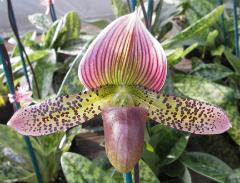
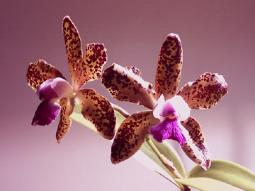
| We have a few plants left over from our spring sales. Some are still in bloom. We've re-potted everything now and waiting for them to become established. If you’re interested in purchasing one of these recently re- potted treasures, check out our web site at http://store.orchidenterprise. We have mini-Cattleyas, Oncidium hybrids and a few maudiae type Paphs. It’s a great way to increase your collection with blooming size plants, many of which are clones – so you know they are superior plants. Since they've just been re-potted, you won’t have to re-pot for at least a year! Just remember, as a recently re- potted plant, they will need more frequent watering until the mix starts absorbing more water. |
A) What works for me, may not work for you. B) If you haven’t killed an orchid, you’re not an orchid expert. C) If it isn’t broken don’t fix it. D) If you’re going to try something new, do it with something you can afford to loose. E) If you’re going to try something new, test it on a few orchids for at least a year. F) Not all orchids read the same book you did! G) Finally: re-pot re-pot re-pot. |
newsletter and receive up-to- date information on specials, events, timely tips on culture and much more. Just send us an email to: sales@orchidenterprise.com and put "Sign me up for your newsletter" in the subject of your email! |
To un-subscribe to our newsletter simple send your request to: sales@orchidenterprise.com |
like getting a lot of junk mail in your in box. We don't want to be just another piece of junk- email for you to deal with. Let us know what you'd like to see here in our newsletter. If we're doing a good job, let us know that too. And tell a friend - maybe they'd like to subscribe. |


Custom Search
Custom Search